
Signals Before Towers
Headland fires, lanterns, and daymarks warned vessels where charts and shorelines failed.
Early coastal records describe local watch systems rather than a unified service.
Northern Coast Historical Archive
Trace the towers, keepers, and weather-worn records that shaped daily life along the northern coast.
Field record · Northern coast · Weather station notes.
Chronological record
A concise editorial timeline of how navigation methods, tower engineering, and day-to-day signal practice changed along the coast.
Before 1800
Headland fires, lanterns, and daymarks warned vessels where charts and shorelines failed.
Early coastal records describe local watch systems rather than a unified service.
1800–1850
Permanent masonry towers brought stronger foundations, raised lantern rooms, and regular keeper rotations.
Construction notes often pair tower height with visibility from known sea approaches.
1850–1900
Fresnel optics concentrated modest flames into distinct beams that could be identified far offshore.
Flash patterns became a practical language of place along the coast.
1900–1960
Improved fuel systems, fog signals, radio, and electric lamps reduced some labor while expanding reliability.
Keeper logs still centered weather, maintenance, and the daily discipline of the watch.
1960–Today
Many stations were automated, decommissioned, or adapted as communities worked to retain their structures and records.
Preservation now joins architecture, landscape, and keeper memory in one public history.
Representative keeper-life vignettes
These scenes synthesize recurring duties described in historical station records and are presented as representative historical vignettes for general readers.
Every beam depended on a thousand repeated tasks.
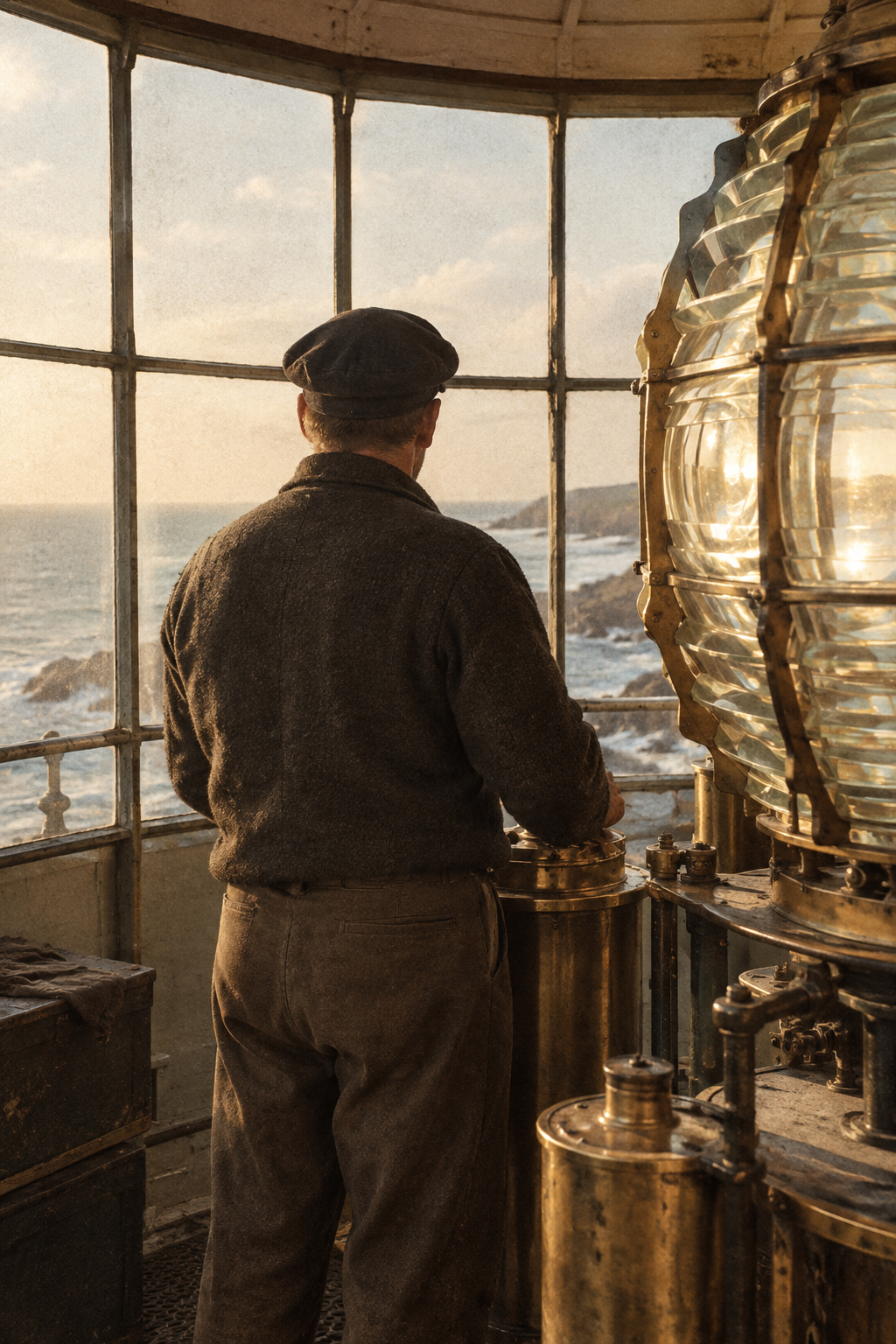
Night duty · late nineteenth century
A keeper trims the lamp, checks the glass for salt, and records a gale while the household sleeps below.
Fog station · early twentieth century
When the beam disappeared into cloud, sound became the warning and machinery demanded its own relentless attention.
Remote headland · between the wars
Work and home shared the same walls as families taught lessons, received supplies, and kept the station ready together.
Interpretive coastal directory
Names and placements below form a representative reference map for exploring preservation themes along the northern coast; this is not a navigation chart and does not provide exact coordinates.
Photo Archive
Six archival views close the exhibition: towers, weather, optics, and keeper life observed with a warm documentary eye.
Return to the Map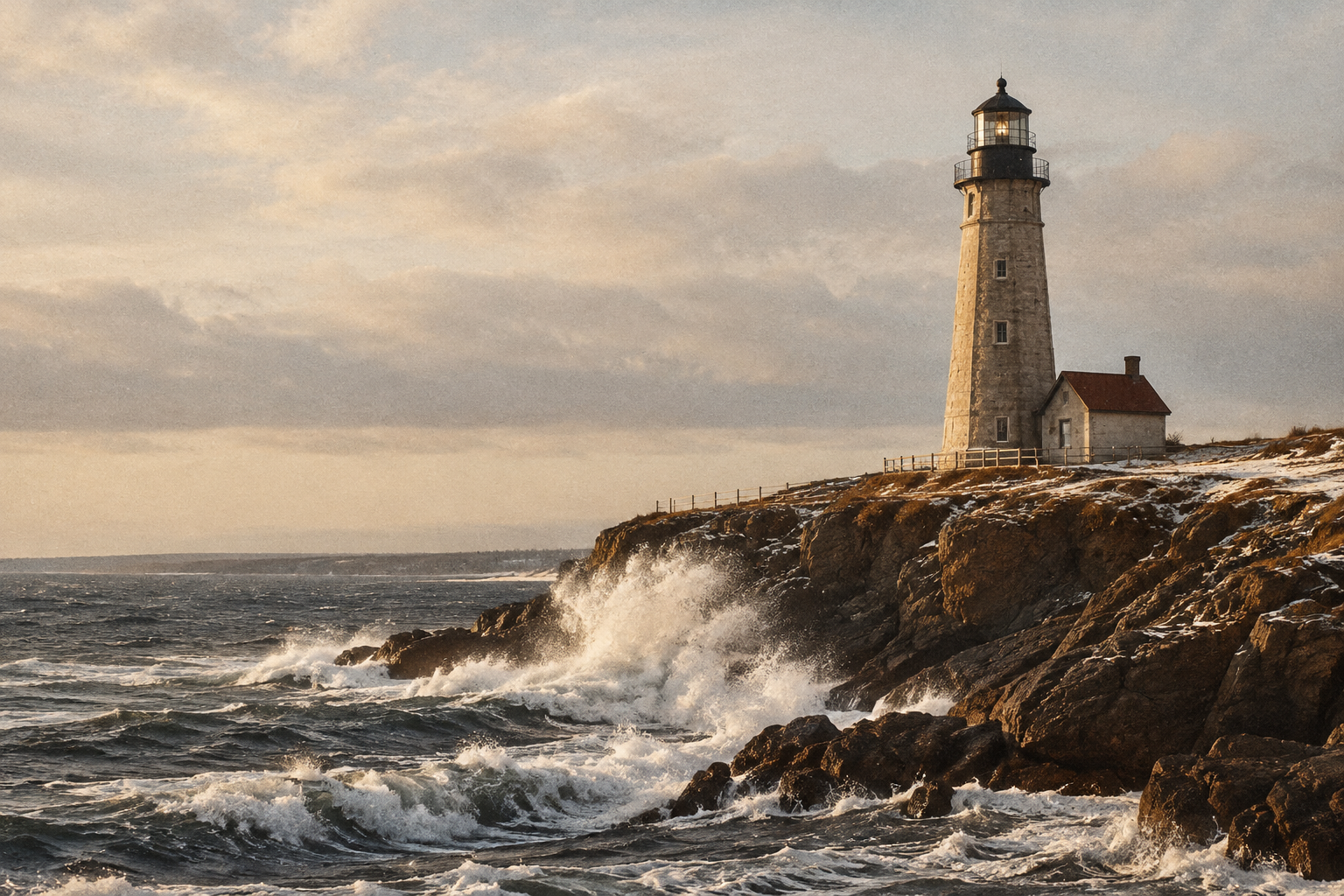
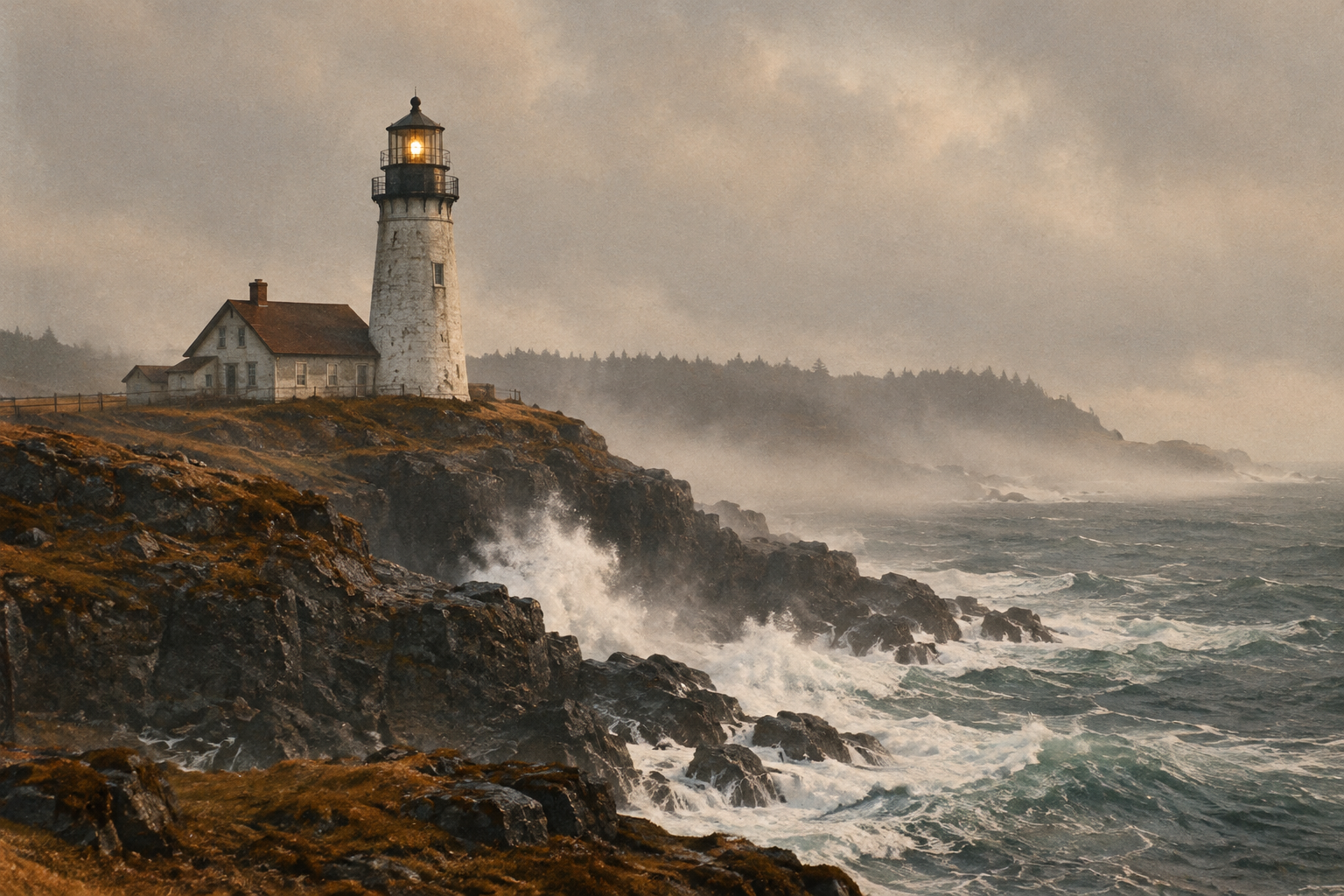
Coastal tower study · winter light
A tall masonry lighthouse above dark breakers and sea spray under a pale winter sky
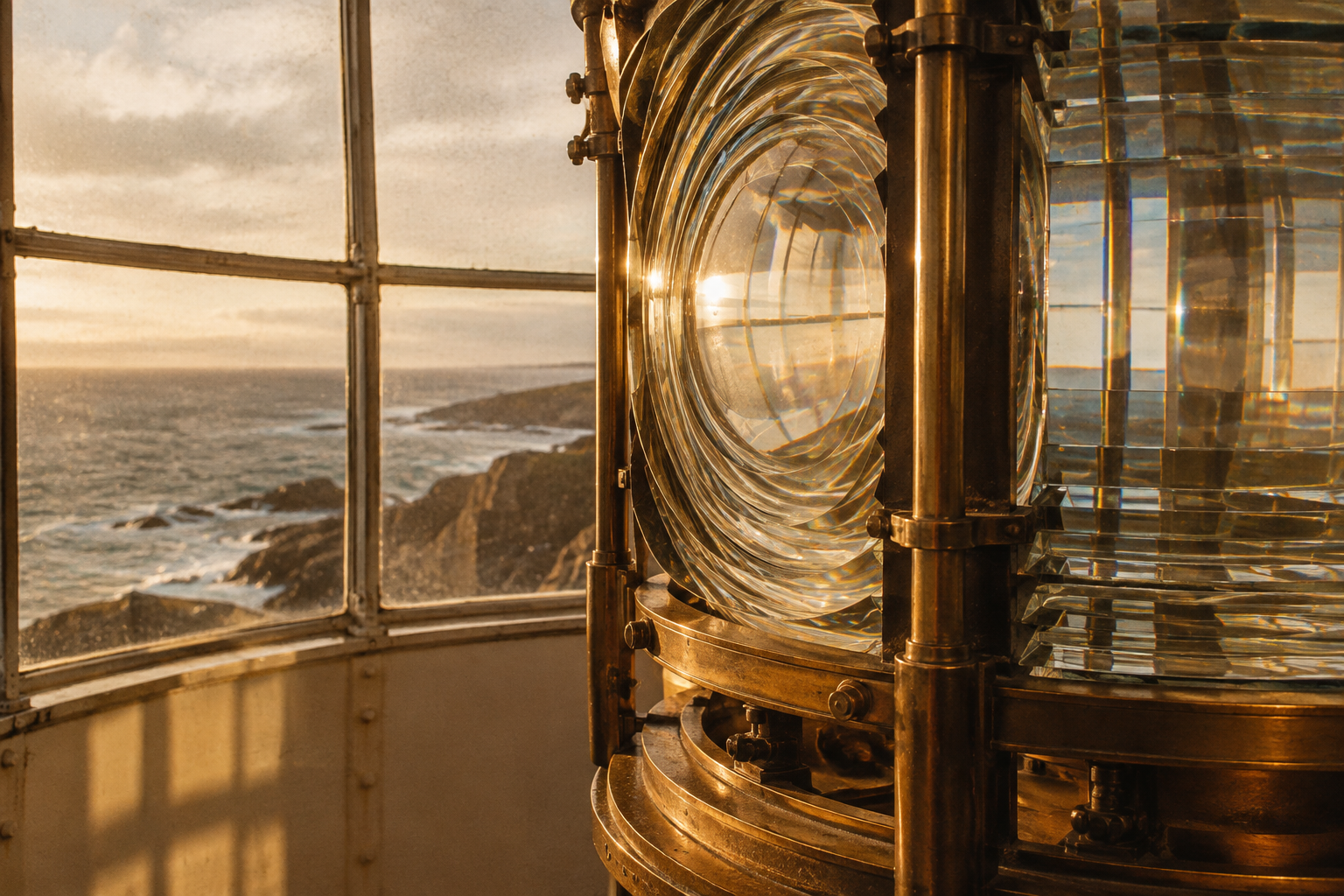
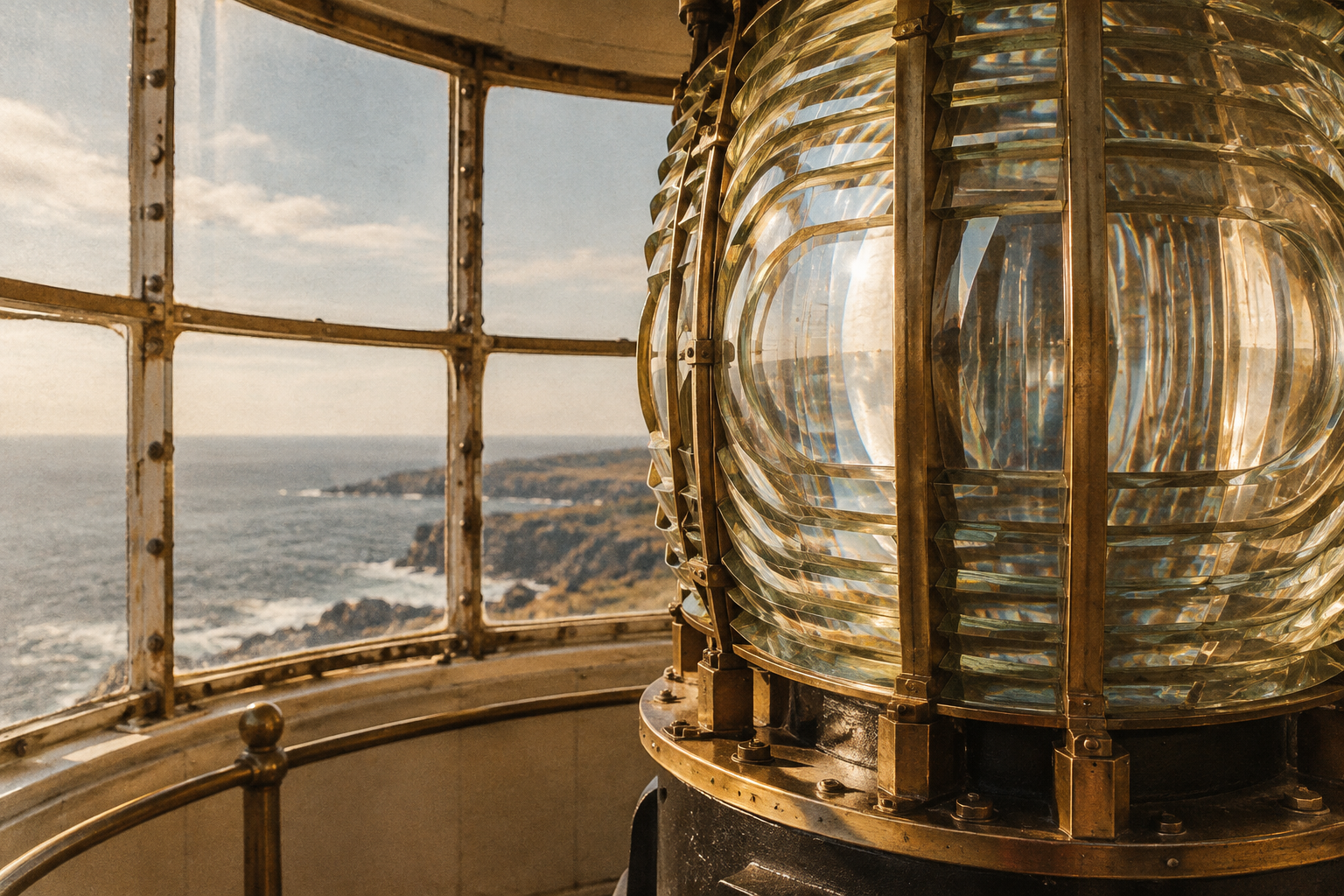
Lantern-room detail · maintenance interval
Close view of a historic Fresnel lens, brass fittings, and reflected window light
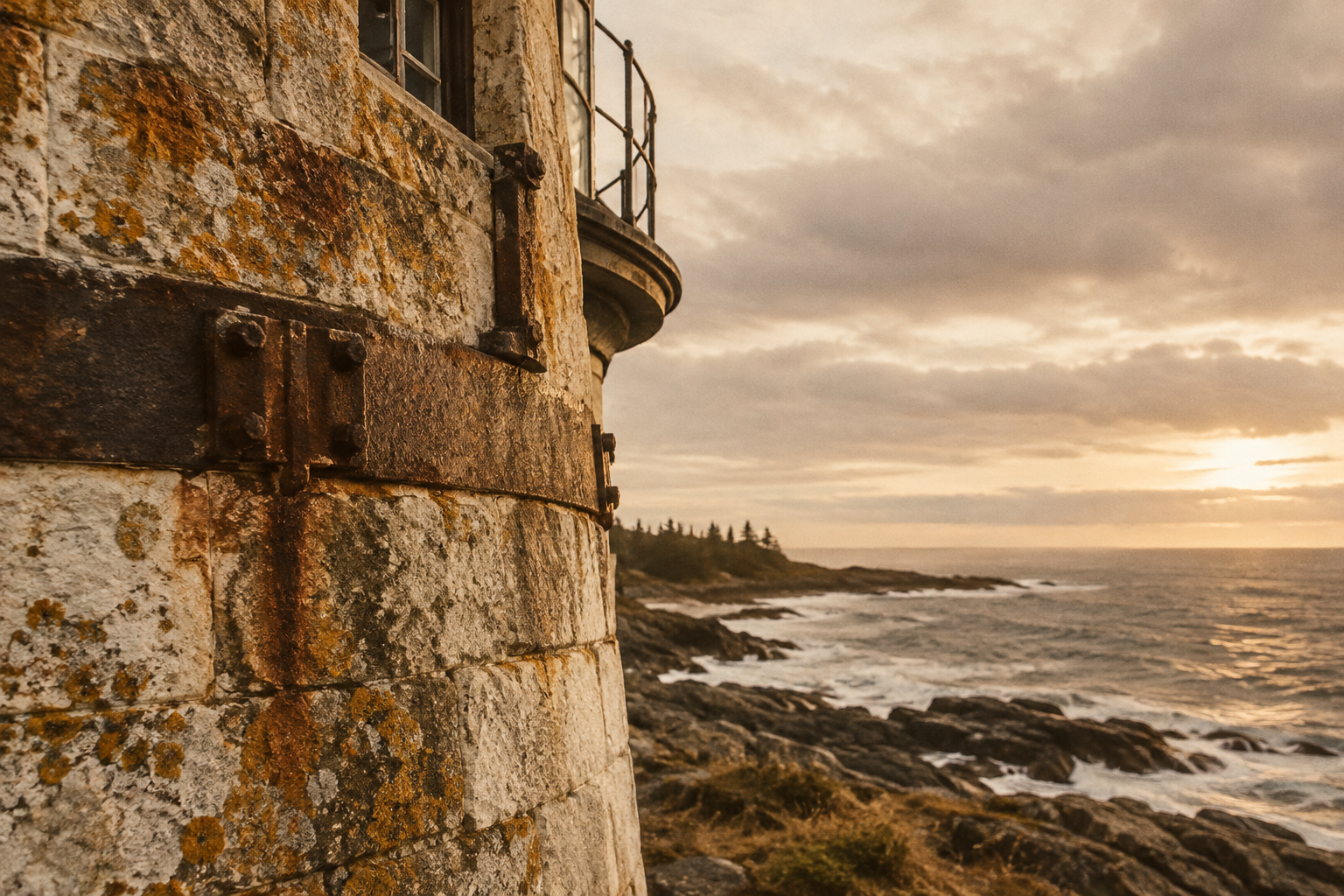
Exterior detail · salt and wind
Weathered lighthouse masonry, iron fastenings, and lichen in warm analog film tones
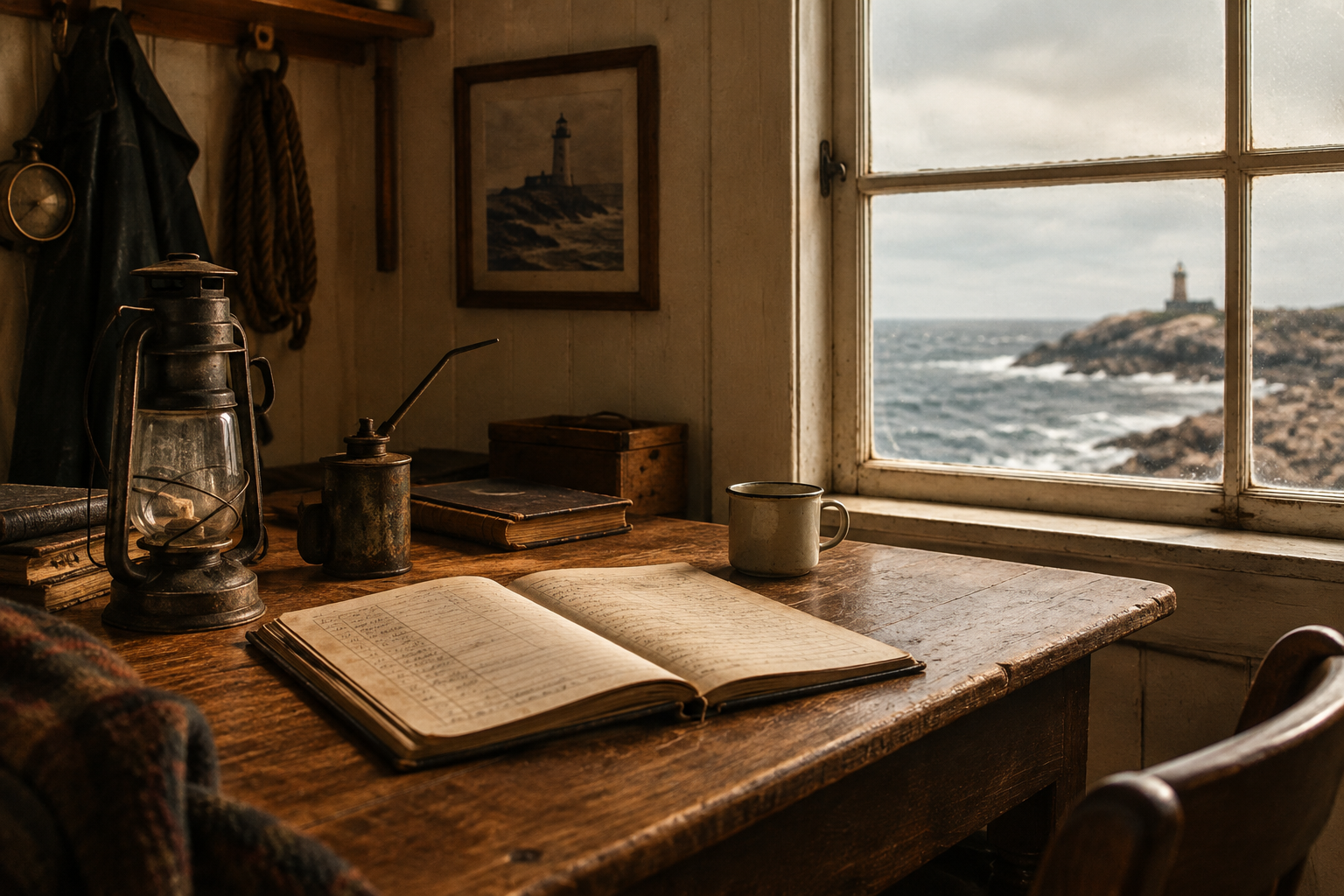
Keeper interior · daily work
Simple historic keeper room with logbook, oil can, wooden table, and narrow sea-facing window
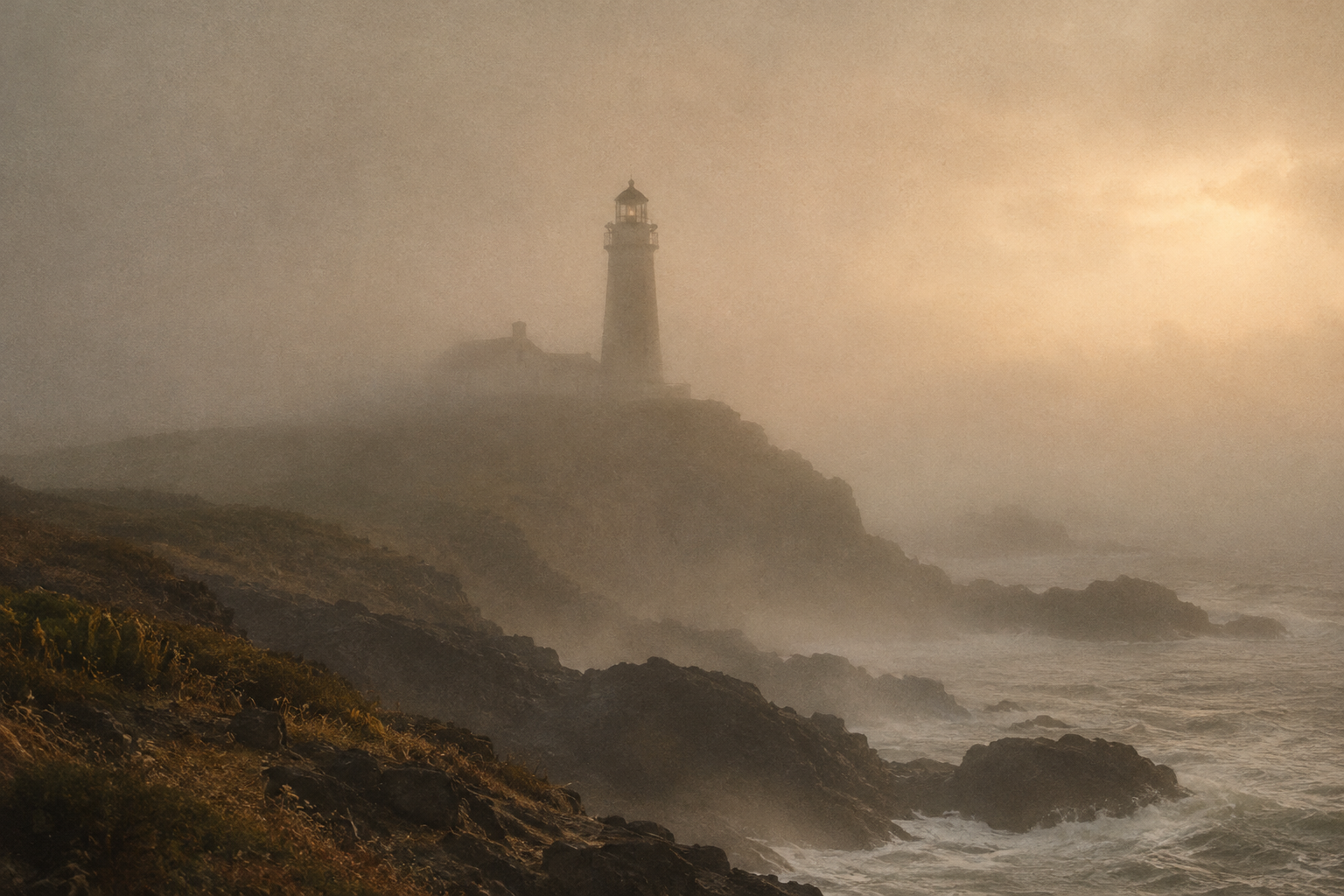
Visibility study · morning watch
Lighthouse silhouette partially obscured by dense coastal fog across a rugged headland
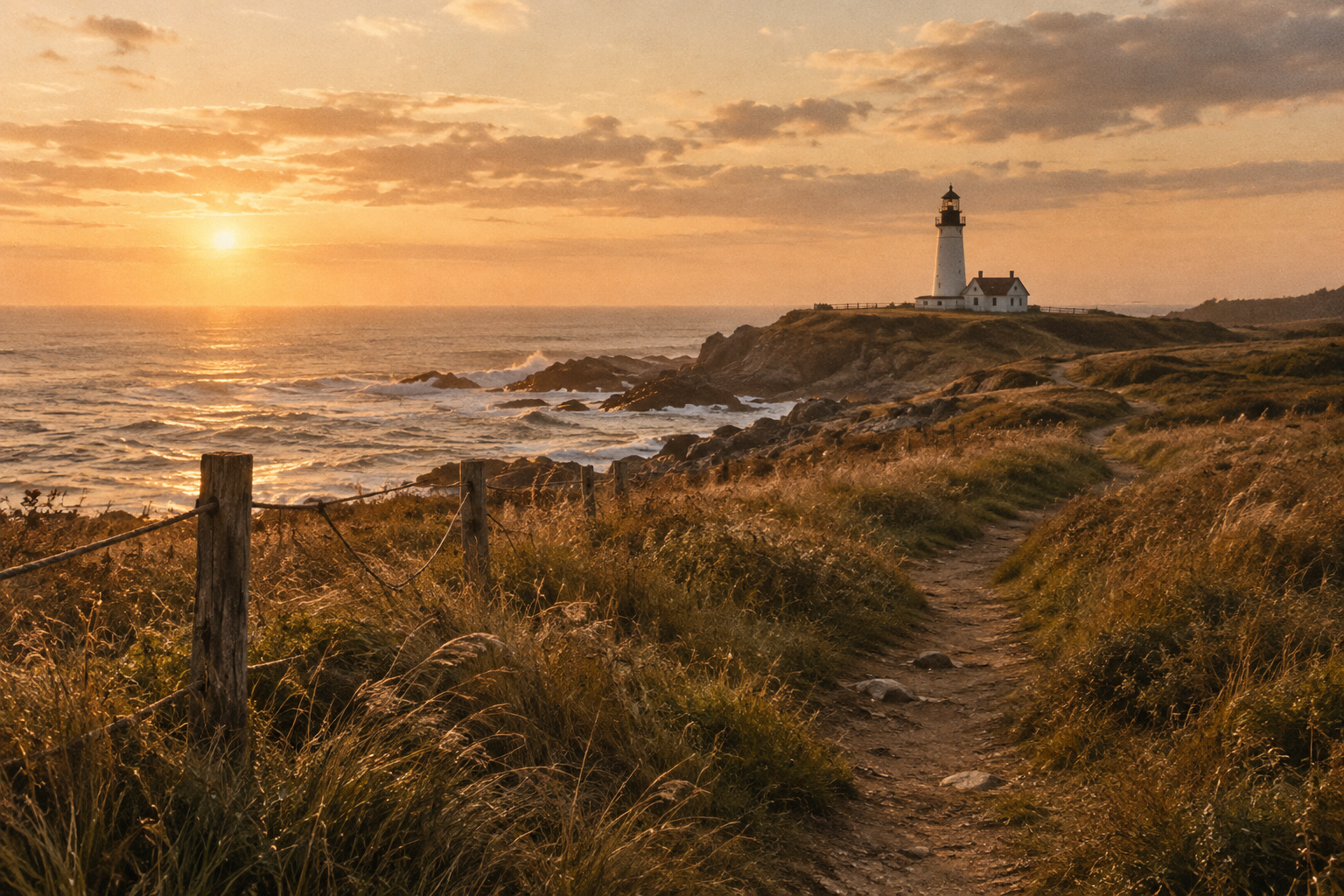
Shore approach · supply route
Worn path through coastal grass leading toward a distant lighthouse in amber evening light